
The psychological impact on Michigan detainees
By Claire Keenan-Kurgan, Michelle Jokisch Polo, Adam Yahya-Rayes
For many of the people detained at North Lake Processing Center in Baldwin, there is no way to know how long they will be there.
“I feel abandoned,” says Kamal Tijani, who arrived in the United States from Nigeria in 2017. “In here, sometimes you feel down, and sometimes you feel like you know nobody cares about you… you call your friends, and they don’t pick up.”
Tijani has been at North Lake since October 2025—meaning that he has spent nine months in U.S. Immigration and Customs Enforcement (ICE) detention.
In Michigan, hundreds of immigrants are being held inside detention centers for more than six months—and for some, like Tijani, it has been closer to a year.
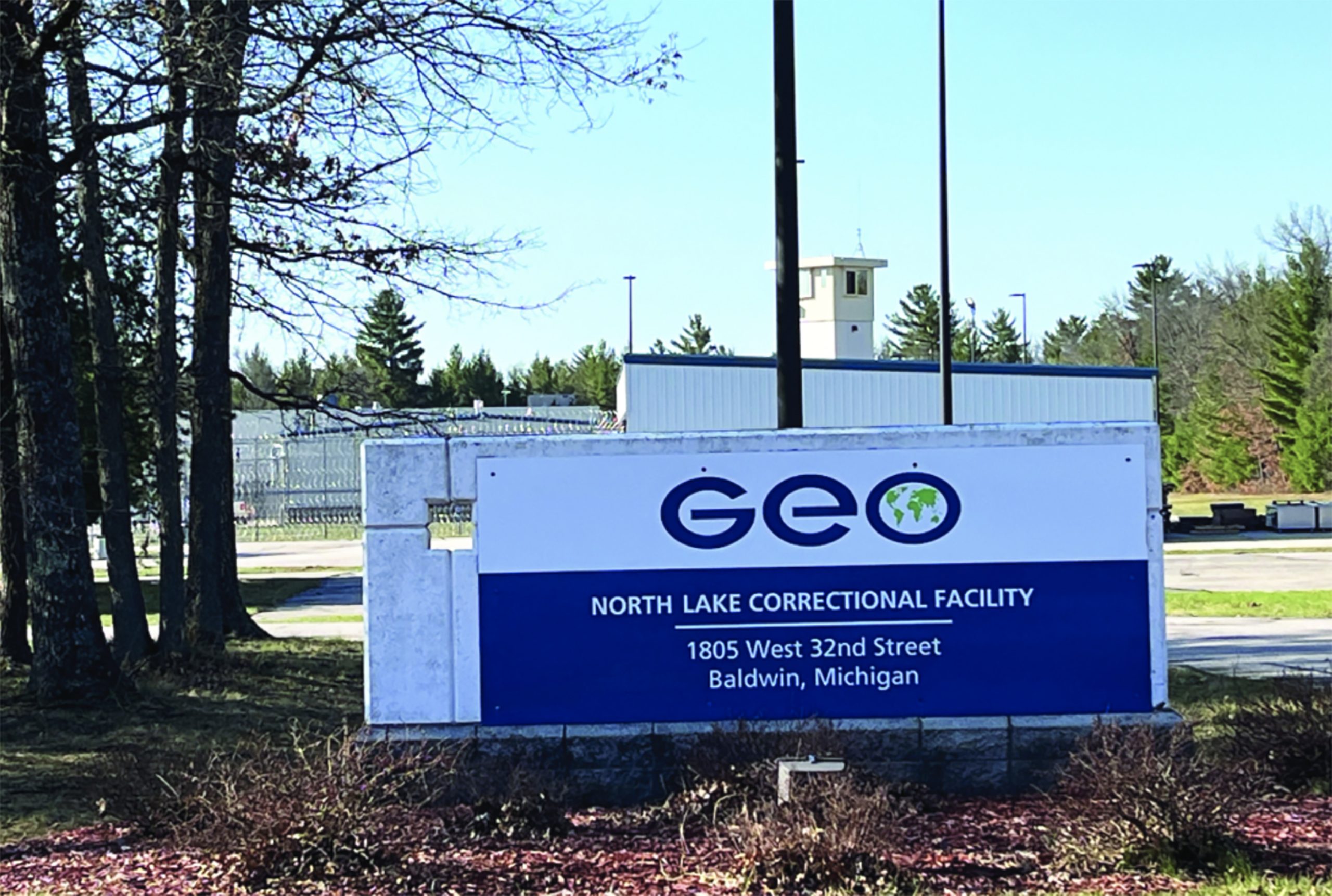
The facility in Baldwin—located an hour south of Benzie County—is owned by GEO Group, a private prison corporation that made more than $250 million in profits last year and was a major donor to the 2024 campaign for President Donald Trump (R).
Formerly called the North Lake Correctional Facility, the space was a privately owned prison that originally opened in 1999 but was closed in 2022, when the federal government canceled contracts with for-profit prisons. The North Lake Processing Center, as it is now called, re-opened in 2025 as an immigrant detention facility. It currently holds approximately 1,400 detainees and has a capacity of 1,800—making it the largest in the Midwest.
Similar Stories
Tijani first came to the United States to live with his uncle and attend college in Chicago on a student visa that was valid through 2019.
There, he met his now-wife, who is originally from Georgia. They moved into an apartment in Chicago, and he worked night shifts as a maintenance technician.
When ICE arrested him last October, officials said that he had violated the terms of his student visa by staying in the United States beyond its expiration date.
Without his income, his wife lost their apartment and had to go back to stay with family in Georgia. She has not been able to make the trip up to Michigan to visit him.
“I just got married last year,” he says. “And you want to send me back, you want to separate me from my friends, my family, my wife—for what, you know, for what reason?”
In the nine months that Tijani has been at North Lake, he has gotten to know another man in his unit named Stanley Minjale.
Like Tijani, Minjale has also been at North Lake for nine months. He was working as a nursing assistant in Chicago and living in Indiana when he was detained.
“It’s quite challenging,” Minjale says of being held in North Lake. “It’s not easy to be here for that long period of time without freedom, just doing the same thing every day, the same routine.”
Minjale immigrated to the United States from Malawi in 2021 on a student visa that was initially valid through September 2022. He later received an extension through March 2027, but that status was terminated after he failed to enroll in a university, as required.
At the time of his arrest, Minjale had a work permit and was working full time.
He has a U.S. citizen son, who is two years old. During the time that he has been detained, he has missed several of his son’s developmental milestones, including his second birthday.
The possibility of being deported back to Malawi scares him.
“I can’t leave a toddler, just like that,” Minjale says. “That means he’s going to grow up without a father.”
Tijani and Minjale are just two men who have spent months together in the same unit. As of March, there were around 100 people, including women, from all over the world who had been at North Lake for six months or longer.
The average length of stay there is six weeks, according to the latest data retrieved from ICE by the Deportation Data Project—which has not been updated since March of this year.
Both Minjale and Tijani have received deportation orders, but they remain at North Lake, in part, because they are still fighting their cases.
The process for doing so is bureaucratic, opaque, and because of policy from the Trump administration, they are being detained indefinitely.
Tijani says many of the people around him are also depressed:
“They don’t know if they are going to go out here in America, or if they are going to go back to their country.”
Detainment in a Former Prison
Before it became a detention center, North Lake operated as a private prison for years.
Today, not much has changed, beyond the facility’s name. More than half of the people held there, as of March, had no criminal convictions or pending charges. Rather, they are held as “immigration violators”—a civil charge.
“Legally speaking, people are being held administratively—but the experiences they’re having while they’re detained are very, very similar, if not identical, to the experience that any incarcerated person is having,” says Caitlin Patler, a sociologist at the University of California Berkeley who studies the effects of U.S. immigration policies.
However, Patler says, unlike people who are held in jails or prisons for crimes they committed, many immigrants have no sense of when they will be released.
They do not know how long they will be detained, says Patler, “and there are really very few constitutional limits on the length of detention.”
Not everyone in ICE custody is treated the same. Some immigrants are subject to mandatory detention, meaning they cannot be released on bond while their immigration cases are pending. Others can request a bond hearing before an immigration judge.
A 2018 Supreme Court ruling allowed the federal government to detain certain immigrants for prolonged periods without providing automatic bond hearings. Those subject to mandatory detention generally include some newly arrived asylum seekers and immigrants with certain criminal convictions, including lawful permanent residents.
Since returning to office, the Trump administration has sought to broaden the categories of immigrants subject to mandatory detention to include immigrants who have not been charged with a crime.
Federal courts across the country have largely rejected those efforts, but the issue is likely headed to the Supreme Court, which will decide whether the government can hold certain noncitizens in immigration detention for extended periods, without access to a bond hearing.
Not knowing when a release will take place—coupled with an immigrant’s experience inside detention—leads to poorer health outcomes for those detained, according to Dr. Altaaf Saadi, a neurologist at Massachusetts General Hospital in Boston who has been researching the health impacts of long stays inside immigration detention.
“Being isolated from their family for months, their children for months, can be psychologically devastating,” Saadi says.
And then on top of that, those being held may also be facing precarious conditions inside detention centers.
Just a few months ago, at the North Lake Processing Center, hundreds of detainees staged a hunger strike over concerns about poor food and medical care and prolonged detentions. (Notably, more than 300 detainees at Delaney Hall in Newark, New Jersey, recently made national headlines when they also staged a hunger strike; that facility is also owned by GEO Group.)
Saadi’s research has shown health outcomes worsen with each month in detention.
Immigration officials have said that detention is the best way to make sure people are actually processed for removal from the United States.
But for immigrants inside, this means they are stuck, not knowing when they will see their families and friends again.
“I’m depressed when I think about my family out there. I’m so depressed most of the time, so I always try my best not to think about it, just to be strong,” Minjale says. “[To] read a lot of books and to interact with these people, like playing cards, playing chess, playing checkers… to buy time. But it’s not easy. It’s very hard.”
Both Minjale and Tijani have appealed their deportation orders, but they do not know when the immigration court will make a final decision on their case. Until then, they remain at the North Lake Processing Center.
This reporting is made possible by the Northern Michigan Journalism Project—led by Bridge Michigan and IPR—and is funded by Press Forward Northern Michigan.
Featured Photo Caption: North Lake Processing Center in Baldwin, Michigan–located just about an hour from Benzie County–currently holds approximately 1,400 detainees, with a capacity of 1,800; it is the largest ICE facility in the Midwest. Image courtesy of the Glen Arbor Sun.
Leave a Reply