
A quest to visit 250 historic sites
By Linda Engelhard
Current Contributor
My husband, John, and I had escaped Northern Michigan’s snowmageddon earlier this year and were heading toward the coast of Georgia, surrounded by Civil War history on the way. Without snow to shovel, we began to contemplate what a genuine celebration of the 250th year after the signing of the Declaration of Independence might look like for us.
Celebrating a national anniversary is kind of similar to looking ahead at a milestone birthday—with good, bad, and sometimes ugly aspects.
We love this country. That said, we also love justice, honesty, kindness, generosity—the values we grew up with that seem to be less embraced by many people in 2026.
Ultimately, we settled on a quest to celebrate America’s 250th birthday by learning more history and visiting 250 historic sites by the end of this year.
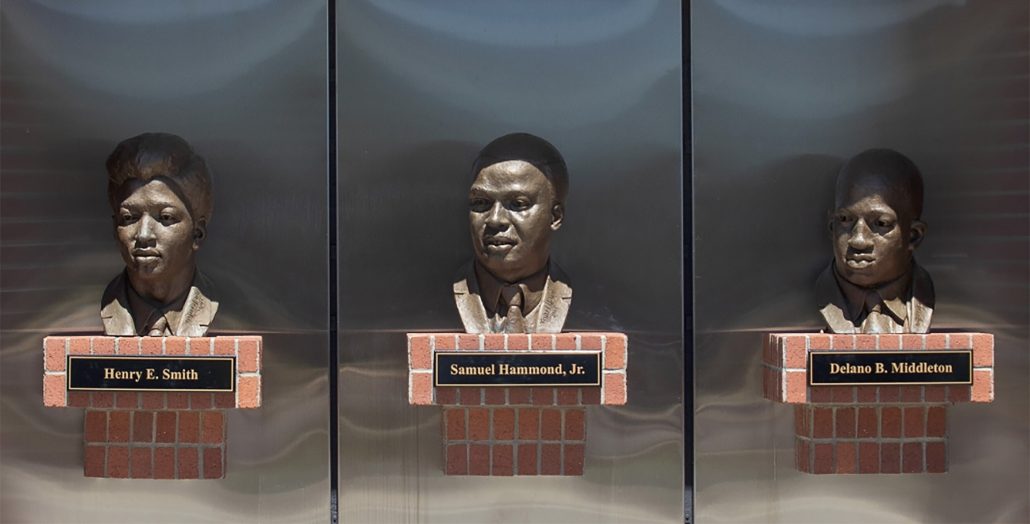
The very first site we visited was at South Carolina State University. A security guard met us at the gate and helped us to find the Orangeburg Massacre Memorial on the campus map. We made our way to Legacy Plaza and found a substantial brick-and-steel structure surrounding the busts of three handsome young men: Samuel Hammond, Delano Middleton, and Henry Smith. In 1968, they were killed—and 28 others were injured—by police while protesting on campus about segregation at the local bowling alley.
John and I were college students in the late 1960s and early ’70s, so watching news stories and reading about the horrible killing of four white students at Kent State University in 1970 are clear memories. However, neither of us remembers hearing news reports about the killings of these three Black men at South Carolina State University just two years earlier.
Making our way south, we spent a day in Charleston, first visiting Mother Emanuel African Methodist Episcopal [A.M.E.] Church, where a white supremacist murdered the pastor and eight church members just 11 years ago.
Almost two centuries earlier, white citizens in 1822 had destroyed the building where the A.M.E. Church had been meeting in Charleston and had hanged several church leaders involved with a slave uprising.
Mother Emmanuel’s statement “grace means courage” has been tested throughout the years by racism, an earthquake, and a hurricane—but they continue to thrive.
Closer to the harbor, we stopped at the Old Slave Mart Museum, located in part of a building that housed “Ryan’s Mart,” the last major slave market in Charleston. When the Union Army reclaimed Charleston in 1865, all slave trading was outlawed.
On the day we were there, visitors of all colors filled the nearby sidewalks—a sign of hope going forward.
We journeyed on toward our destination, St. Simons Island, Georgia, a place we love to visit—but this time we looked around us with a mission.
Driving through Brunswick on our way to the F.J. Torras Causeway, we stopped at the Ahmaud Arbery Memorial Park, a modest space honoring the memory of the young Black man who was gunned down in 2020 while jogging in the Satilla Shores neighborhood. Even the beauty of Low Country marshes could not erase the sadness of his death.
After getting settled and breathing in the salty St. Simons breezes, we decided to explore a building we had passed many times: the World War II Home Front Museum. Outside of the museum stands a metal marker titled “S.S. Oklahoma and Esso Baton Rouge, attacked by U-123.”
Two of our grandsons accompanied us to learn more about World War II along the Georgia coast and were soon mesmerized by the interactive exhibits about radar and plane identification. All of us were amazed to learn that more Americans died along our Atlantic Coast during World War II than at the World Trade Tower attacks on September 11, 2001. (Georgia has developed a World War II Heritage Trail, so we have even more to learn next year when we go there.)
In the northern half of St. Simons Island, we visited Fort Frederica, the preserved ruins of a town developed by James Oglethorpe and a fort where the British defended the island from attacks by Spain. And on the southern end, near the river, we walked around Gascoigne Bluff, where trees were felled and shipped north to build “Old Ironsides,” also known as the USS Constitution, the world’s oldest commissioned warship that is still afloat, which originally launched in 1797.
Adjoining the bluff, the Hamilton Plantation is a disquieting reminder of life prior to the Civil War. Long-staple cotton was grown and harvested by enslaved persons and shipped from the plantation’s wharf.
We questioned why neighborhoods throughout the South still choose to include “plantation” in their names.
At the end of our “snowbird” vacation, as we drove north toward our native state, we realized that we also need to work harder to learn more about our own Michigan history and wondered how many historical sites we could find on our return route.
We had visited the Underground Railroad Sculpture last year, but Battle Creek was not on our route this time. In Ann Arbor, though, we found a plaque honoring the Michigan Antislavery Society, founded in 1836 at the First Presbyterian Church, moving to the First Congregational Church in 1847.
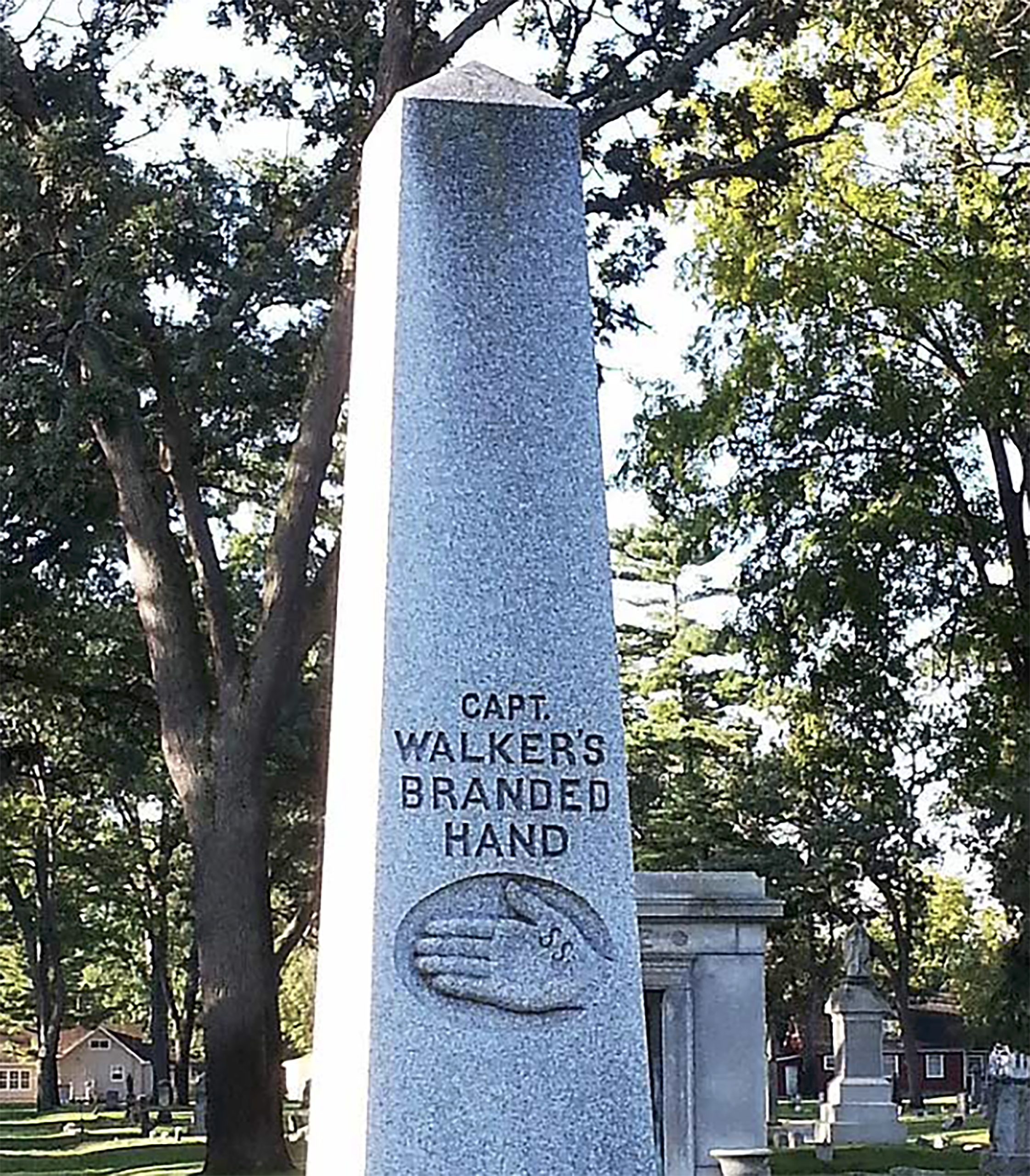
On the west side of the state, we visited Captain Walker’s Branded Hand monument at the Evergreen Cemetery in Muskegon.
Captain Walker was a staunch abolitionist sea captain who helped enslaved people to escape from Florida to the Bahamas. When he was caught, his captors branded his hand with “SS” to signify “slave stealer,” and he spent a year in solitary confinement. Supporters from the North helped him pay a fine for his release, and until the Emancipation Proclamation in 1863, he traveled the country showing his hand and exposing the cruelties of slavery. He earned his retirement on a fruit farm near Muskegon, which is why there is now a monument for him there.
Our list has grown to 114 sites so far—nearly halfway to our goal—but it is already July, and the pressure is building.
Fortunately, our granddaughter will start college in New York this fall, so we hope that a fall road trip will provide opportunities to learn even more about our American history during 2026, the semisesquicentennial, the 250th anniversary of the signing of the Declaration of Independence and the founding of the United States.
A version of this article first published in the Glen Arbor Sun, a Leelanau County-based semi-sister publication to The Betsie Current.
Featured Photo Caption: Captain Walker’s Branded Hand monument at Evergreen Cemetery in Muskegon, Michigan. Photo courtesy of the Commons.
Leave a Reply